Brad Spurgeon's Blog

A world of music, auto racing, travel, literature, chess, wining, dining and other crazy thoughts….

From the Don Camilo to a Paul Ricard Room Near the Champs Elysées, a Couple of Bits of Playing to Remember

June 6, 2018
bradspurgeon

Circuit Paul Ricard book

Circuit Paul Ricard book

PARIS – Sunday night I suddenly discovered that one of the coolest jam joints in Paris, the Carré jam of Thursday nights, run by Olivier Domengie, had decided recently to try out a singer-songwriter night, at least once a month. So I thought this a perfect moment to get back to the street-level barroom of the legendary Don Camilo cabaret in the Latin Quarter, to play my own songs, in a completely different environment. And two days later, I ended up doing a hugely satisfying private moment at a reception in Paul Ricard’s offices off the Champs Elysées in honor of a book launch before the French Grand Prix, of an oeuvre dedicated to the Circuit Paul Ricard in the south of France. A crazy fabulous couple of moments….

I was hugely surprised and delighted to see that Olivier Domengie was using the Don Camilo room where I attended the jam a few weeks ago to host a singer-songwriter night. That meant not having to do cover songs, going into the same environment and doing something completely different, and depending only on my guitar and voice – as with everyone else – to communicate with this great audience and room. (Which, I remind readers, is located just around the corner from Serge Gainsbourg’s old home….)

As it turned out, everyone was invited to do two songs, and there was still a second round to do another two. By then, I had been preceded by a cool little band on its first public appearance – that’s what I think it was – and I was so bothered by their level and use of guitar, keyboards, vocal and bass, that I jumped at the opportunity to have this other guy play along with me on my second set. He had the coolest, strangest, instrument that sounded variously like a saxophone or a flute, and was, yes, some kind of synthesised “wind” instrument.

Anyway, there were lots of cool musicians, the usual neat vibe of this unique place that has been around for half a century or so, and a thoroughly agreeable evening. I hope they continue this singer-songwriter night (and don’t clash with the neighbourhood’s other such night, at the Tennessee with Paddy Sherlock).

But the real surprise and satisfaction of the week so far came when a former colleague of the Formula One reporting world got in touch with me and invited me to attend the launch of his new book, about the Circuit Paul Ricard, for the return of the French Grand Prix to the circuit in the south of France later this month. This was Daniel Ortelli, the former reporter for the Agency-France Presse of the Formula One series, who is now devoting himself to many different projects, including this new book.

The book, called, “Circuit Paul Ricard: Les Seigneurs de la F1” traces the story of the circuit, as well as Paul Ricard – the man who created the “vrai Pastis de Marseilles,” a wonderfully refreshing alcoholic drink à la anis. The book covers in text an photos, the whole history, in an entertaining and highly readable and visually beautiful manner. (Photos by my former colleagues Bernard Asset and Bernard-Henri Cahier, or the latter’s father, Bernard.)

Anyway, when I accepted the invitation to the event, much to my surprise and satisfaction, Daniel invited me to bring my guitar, as well. He knew about my adventures around the world playing music at all the open mics and jams in the cities of the Formula One race, and he thought it could be fun to have me there to play a mini-set. I was kind of worried, and a little modest, as this was, after all, taking place at the Salon Paul Ricard, at the posh offices and reception area in a building off the Champs-Elysées.

But Daniel’s invitation looked genuine. So I went with my guitar, and ended up doing exactly the mini-set he suggested, and it turned out to be a fabulous moment, and a great evening with many former colleagues and other interesting people from French motorsport, including the former director of the Paul Ricard Circuit, Gerard Neveu, who is now the C.E.O. of the World Endurance Racing series.

So, could I have possibly had two different kinds of musical moments and locales in Paris? Probably not – nor two equally fabulous moments either.

Oh, of course, my nerves had a bit of help last night with the imbibing of a 51 Picard before I played….

A New Edition of Philosopher of Optimism, and a First Look at a Never-Before-Released Video Interview with the Not So “Angry Old Man,” Colin Wilson

November 26, 2017
bradspurgeon

Philosopher of Optimism

Philosopher of Optimism

PARIS – It has soon been four years since Colin Wilson, one of Britain’s angry young men of literature in the 1950s, died as a not-so-angry old man – at age 82 on 5 December 2013. The anniversary has provided an impetus for a couple of unfinished projects to finally come to life: A new edition of my interview book with Wilson, called, Colin Wilson: Philosopher of Optimism, and the release of some excerpts from another interview I did with Wilson in the same year of the book publication, in 2006. For the book, it was time to update the story and write about the rest of Wilson’s life after the interview, as well as to write a new preface in which I talk about the strange way this book about optimism came at the time of my life when I needed that sense more than ever before.

For the film, it made sense for this project that has been hibernating for 11 years, to finally see some daylight. So it is that Excalibur Productions of Yorkshire, in the UK, and Michael Butterworth Books of Manchester, all agreed to release some excerpts from that never-before-seen video interview between Wilson and me. For me personally, it was very strange to see myself 11 years later, in another lifetime, and having survived that dark period. For fans of Wilson’s writing and philosophy of life, it is a great moment to see this extraordinary British writer as if coming back to life.

Wilson, for those of you who do not know him, shot to world fame at the age of 25 in 1956 with the publication of his first book, called “The Outsider.” It was a kind of popular introduction to existentialism in the UK, a study of such outsiders as Nijinsky, T.E. Lawrence, Hermann Hesse, William Blake, and many others. It came out at the same time and was reviewed at the same time as the playwright John Osborne’s “Look Back in Anger,” and the British press decided to label these writers “Angry Young Men.”

Colin Wilson Philosopher of Optimism New Edition and New Interview

The label would be passed on to many other writers of the time, such as Alan Sillitoe, Arnold Wesker, Kingsley Amis and others. Wilson would be no doubt the most prolific of them all, and he was also the one that was ultimately the most difficult to pin down and label as a writer beyond that initial effort. He would write books covering such a diversity of subjects – crime, the occult, philosophy, psychology, biography, fiction and many other things in over a hundred books through his life – that his reception by the critics and the British literary world in general, went through a permanent roller coaster of a ride between respect and reviling him throughout his life.

Few readers of influence ever managed to, if not categorize, then at least understand what he was trying to say through this wide cross-section of works. My interview book with him, based on an interview at his home in 2005 – for a story I wrote about Wilson in the International Herald Tribune and The New York Times – managed somehow to tie together all the disparate parts and make a consistent whole out of Wilson’s oeuvre.

“Wilson’s philosophy of optimism runs like a clear thread through all of his varied works,” is how my book’s publisher, Michael Butterworth Books, puts it. “It is at the very battlefront of the fight against the pessimistic world-view. At its core lie the twin concepts of ‘intentionality’ and the ‘peak experience’, which show us that if we open our eyes and direct perception properly we can use our minds in the most positive sense to bring change to ourselves and to the world about us.”

Not long after the book was published, I was invited by the Excalibur people to interview Wilson on camera. This interview too was a long, wide-ranging one that lasted some two hours in total and touched on just about all aspects of his life and writings. Somehow, for many and varied reasons, the film never got released…until now with these excerpts.

Colin Wilson

Colin Wilson

So I hope you enjoy this “blast from the past” because it is just as pertinent, or even more so, to our chaotic and difficult present….

By the way, although the official publication date of the book is in early December, the book is now available to be ordered either from Amazon (and other such sites) or directly from the web site of Michael Butterworth Books.

And the excerpts from the 2006 interview are in the video linked above. Check it out!

Oh, and before I forget. I think that we are in perhaps the beginning of a new wave of appreciation for Wilson, as I say in my new preface, with most notably the publication last year of the first full-length biography of the writer, called, “Beyond the Robot: The Life and Work of Colin Wilson,” by Gary Lachman.

A New Not-Book-Review: Mike Nesmith’s Autobiographical Riff, “Infinite Tuesday”

July 24, 2017
bradspurgeon

Infinite Tuesday

Infinite Tuesday

PARIS – You can’t run with the hares and hunt with the hounds, said Ernest Hemingway, referring to what he thought of book reviewers who were also fiction writers. That is why on this blog a few years ago I came up with my concept of the Not Review, which I have done periodically in the form of Not Reviews of music in my “Morning Exercise Music” listenings, in Not Reviews of films, and Not Reviews of books. The idea is I’m not criticizing, or placing myself in a high position of cultural authority, but simply reflecting on books, music or films that I have seen recently, and what they made me think, what they say, how I feel, and what you might want to know about them to see if you want to listen, read or see them. Today, I have put up my latest Not Book Review, this time of the autobiography of Mike Nesmith, the former Monkee, which is called, “Infinite Tuesday.” He also refers to it as an “autobiographical riff.” Check it out on the link above! His is a fascinating story that goes way beyond The Monkees – like, how about to creating one of the first music videos, helping to create MTV, and then there is his mother the inventor of Liquid Paper….

The First Open Reading at TAC Teatro in Milan – Bluegrass Style….

May 13, 2017
bradspurgeon

TAC Open Reading

TAC Open Reading

MILAN – TAC Teatro has a very cool theater room with spotlight and pulpit and seats for the spectators that had been set up to host the company’s first Open Reading on Thursday. But as the guess piled in bit by bit they gravitated towards a room at the back of the theater with a couch, tables, chairs. And bit by bit that gravitated group took the form of a circle. So when it came time for the first Open Reading to commence, Ornella Bonventre, the brains behind TAC, decided that it would be worse than a sin to break up the magical circle. She started the reading in the round. I realized it was very much like the traditional bluegrass jam in the round, round a microphone – but at TAC there was no need for a mic, either.

And so began, and so continued for at least four hours, the intimate reading in the round, featuring a fabulous cross-section of writers, poets, musicians, and just plain “normal people” with something to read or say – including a local representative from a refugee squat who had something to say about his peoples’ rights.

Alessio Lega at TAC Open Reading

I even had my turn to play a couple of songs and break up the literary feel of the evening by a kind of Trou Normande of music. I was not the only musician, there was the poet, writer, storyteller and musician by the name of Alessio Lega, with his guitar and his tales. And there was the up-and-coming rap artist, Cisky, whose discovery of rap and writing led him to rearrange his life during a stint in prison after a false start in life.

The most illustrious guest was certainly Maddalena Capalbi, a well-known, award-winning Milan-based writer. She did not read her own text, however, but left that to a fabulous, dramatic reading by Cisky.

Cisky at TAC Open Reading

All in all, it was a great evening of warmth in the circle – I just wish I could understand more Italian! But it was a fabulous event that shows once again the vast spectrum of shows that TAC hosts with success, whether that be a serious play like Edipo Rap – in which Cisky appears, by the way – a clown show – in which I have appeared in a kind of George Plimpton moment – a piano show, acting or writing lessons, or a group to defend against violence against women.

Update of Thumbnail Guide to Barcelona Open Mics, Jam Sessions and other Live Music

May 27, 2016
bradspurgeon

Barcelona, Spain

Barcelona, Spain

I have updated my Thumbnail Guide to Barcelona Open Mics, Jam Sessions and other Live Music. I was most delighted to find that the Big Bang Bar has reinstated an open mic – of a different kind to the one it used to host, and which I had taken off the list after it was done away with. There are two or three other updates, including great Facebook page for finding open mics.

So take a visit to my Thumbnail Guide to Barcelona Open Mics, Jam Sessions and other Live Music.

So check it out!

A Not-Book-Review: Wayne Standley’s Novella, “The Man Who Looked Like Me”

April 29, 2014
bradspurgeon

Wayne Standley

Wayne Standley

For my second “Not-Book-Review” I did not premeditate that I would write about the book that a friend gave me a few months ago and that I only got around to reading now. I did not imagine that it would be so much fun, so light, so captivating and so genuine. But when I discovered all that, I decided that I HAD to write about it on this blog – especially because I’ve mentioned its author so often here in the past as a musician: Wayne Standley. The book he wrote is called “The Man Who Looked Like Me.” So check out my “Not-Book-Review” of Wayne’s book. Then see if you can find a copy for yourself to read!!!!

As a reminder: This “Not-Book-Review” is a type of article specific to this blog that the first one of which was my talk about the book of another musician, Neil Young – and his “Waging Heavy Peace”. The idea behind the column is that because it is a blog, and because I believe in Ernest Hemingway’s dictum about writers not criticizing other writers in print as reviewers – “You cannot run with the hare and hunt with the hounds,” he said – but because I love to read good books and talk about them, the idea is that I am not going to place myself on a critical pedestal and dictate what is righteous or not about a book I read. I am not going to recommend it as a piece of literature or a consumer product. I am not going to fulfill the role of the book reviewer whatsoever. This blog is my space, Brad’s world. So what I will do when I feel compelled, will be to write about books I am reading or have read or feel compelled to write about for any other reason – my “Not-Book-Review.” Something people can read, and should read, only as a reflection of how I felt about the book – not a recommendation that they should or should not read it.

So, again, here is my Not-Book-Review of “The Man Who Looked Like Me” by Wayne Standley.

Flash Visit to la Tireuse, Flash Post and a Related Flash New Blog

January 22, 2014
bradspurgeon

PARIS – For various reasons, I did not get to leave the apartment last night until very late in the evening. I decided nevertheless to head over to the closest open mic, La Tireuse, to see if there was a chance to play, even in a flash, last-minute visit.

As it turned out, it was a fairly quiet – yet comfy – night at the Tireuse. I only had the chance to catch the last moment of one performer before I was beckoned to take to the mic myself! This I did with some reluctance, having not even warmed up, tuned my guitar or sung a single time yesterday. As it turned out, the crowd was so warm that I felt egged on to leap into the songs and get out in one piece. It went well, I was told afterwards – of course, I had a little help from Cat Stevens, as I sang two of his songs, and my own “When You’re Gone Away.”

The night ended with Wayne Standley playing on guitar along with Ollie, the MC, playing lead. That was very cool. After that I then learned of two personal projects from these fine musicians, as Wayne gave me a copy of a cowboy novel he wrote, and Ollie told me about a new blog he has just started.

I immediately returned home and looked at the blog, and found something I know I will return to again and again. Ollie has called it “L’Albatros,” and it is a very cool blog that gives thumbnail descriptions and a representative video of obscure or long-forgotten bands in the history of pop music. The ones up there right now range from the Canadian group Bachmann Turner Overdrive, to Jim Croce, Harry Nilsson and Fred Neil. But Ollie clarified to me that a lot of the groups would be well known to me, and to their specific audiences, but less known or completely unknown to the French – the language in which the blog is written. (Gordon Lightfoot and Steely Dan seem good examples of that.) But this looks like a real winner of a blog, and I’ll be returning.

I started reading Wayne’s book this morning, and found a new voice – in the written word, that is, because it sounds very much like the Wayne I know singing….

An “Imperfectionist” Inspired Rant on Paper Manuscript Submissions in the Electronic World

November 1, 2013
bradspurgeon

Paper vs. Electronic Submissions

Paper vs. Electronic Submissions

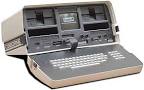
ABU DHABI – A change in subject away from music for the moment: I’ve been reading the novel “The Imperfectionists” over the last few days, my first eBook on my first iPad (mini). I’m behind the times on both the iPad and the eBook. I’ll admit it. I’m not behind the times on computers in general, since my first computer was an Osborne portable, bought in 1982, and everything I have written, thought or imagined since 1982 is contained on a hard disk or two – in addition to the original floppies, other disks, CDs, DVDs and memory sticks since then invented.

But as I read this electronic book by a former colleague of mine at the former International Herald Tribune, I began thinking of discussions he and I had before he sold his book about seeking literary agents, and that led me to thinking again about my task this winter, where I’ll be sending out two of my manuscripts, for consideration by agents and publishers (or three manuscripts if you count the French translation of the novel I’ll be sending – (the other book is my open mic memoir)).

I’ve already started doing some research on agents and publishers, and as I read – joyously – this delightful fiction by Tom Rachman, and thought about how it mattered not one iota whether I read it in an electronic book format or in a hardback or paperback, I began thinking all the various thoughts of paper vs. electronic media. And then I settled on this particular aspect of the “debate”:

How is it, that “traditional” book publishers can charge us 8.99 euros or more for an electronic book that costs them absolutely nothing to produce and distribute in billions of copies, when they charge the same amount – in some instances – for the same book in its paper version, which costs them something in paper, printing and distribution, and yet – here’s the real bit that I’m aiming at – a majority of the best publishers and many of the best literary agents STILL require that authors send their manuscripts to them by snail mail post in printed format?!?! (If they accept submissions at all.)

How Can Publishers and Literary Agents Still Ask for Paper “Manuscript” Submissions?

In other words, while they charge 8.99 euros for an electronic copy that costs them nothing to produce (and I don’t want to hear about the editing staff, etc.), and they expect a reader to be just as happy with reading it in electronic format or printed format, they themselves insist that a poor author pay for printer ink – a fortune – paper to print the manuscript – not a fortune, but it still costs something – and then postage – a fortune?!?

my first computer: 1982

my first computer: 1982


All of which means, the author is probably spending as much or more than 8.99 each time he or she sends out his or her manuscript to a publisher or agent, who will not look at it otherwise, but who, if they like it, will then charge readers the same amount to read it, and take the lion’s share of the profits. I don’t get it. The newspaper industry long, long ago modernized to the point where an electronic story submission is the only kind they really want. (There is a passage in “The Imperfectionists” about an old freelance journalist who is stuck in his ways, and poor, (because he gets no more work) who still faxes his stories to the newspaper, causing a huge headache to the staff each time they have to re-type it into the system.) And yet so much of the publishing industry, that battles to keep its corner of the electronic market and rights, still refuses the electronic submission of what will eventually come out as an electronic product.

The Wonderful, Deceptive Simplicity of ‘The Imperfectionists’ by Tom Rachman

I really would like to have an explanation on this strange, dinosaur leftover from another era. Part of me thinks that because the industry is more bombarded than ever before with manuscripts from potential authors, and because it is easier than ever for authors to make submissions of unpolished or hair-brained books, the editors and agents seek a kind of natural selection process on the basis that the more serious writers will take the time to print out and mail a manuscript, rather than shoot one off on a whim via email.

If that is the case, I don't buy it. A great manuscript will rise to the surface of the slush pile eventually, whether it be electronic or printed out, and the crappy electronic submission is a lot easier and less time consuming and polluting to deal with than the crappy printed manuscript. And the excuse that an editor or agent would really like to sit down in a chair and read a paper version of the novel rather than read an electronic version is really no longer valid, is it? When they are selling us "air" for 8.99 euros or much more….

By the way, it was taking me forever to get around to going to a bookstore to buy a paper copy of Rachman’s novel (or any other English book in Paris), which I had been hearing about for so long from friends and strangers. And I had no real excuse (except Paris), especially since I felt it practically an obligation for me to read a former colleague’s novel, especially one all about the newspaper world, the expat newspaper world that we both worked in. So it was with my new iPad mini in hand that I decided to rectify that situation, and I’m just loving the book!

The Imperfectionists

The Imperfectionists

Rachman has a real way with language, and the characters and situations are extremely memorable. The stories really flow. It is written with a simplicity that is hard to achieve. (As I think Pete Seeger once said, perhaps comparing Dylan and Hank Williams: “Anyone can be complicated, it takes a genius to be simple.” (Although Dylan is a complicated genius in my opinion, and in the opinion of most.)) Of course, I’m not finished the book yet, so perhaps I’ll lose interest…but I doubt it. And if I do, well, it only cost 8.99 after all, and I won’t have to put it on my shelf to collect dust. Of course, I might have to eliminate it from many more places, as it has been migrating from my iPad to my iPhone and maybe soon to my MacBook Pro, if they let me….

Enough rambling rant! If anyone has an answer to my question about how publishers and agents can be committed to electronic books but not electronic submissions, please let me know!

From My Archives: Internet Hieroglyphics in La Repubblica in Italian

August 6, 2013
bradspurgeon

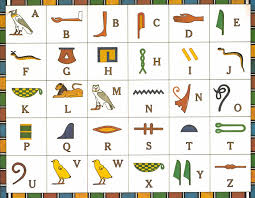
hieroglyphicsPARIS – Another day of no music at the open mics for me as I work on my books and documentary film intensively this August break. Somehow, I was reminded of a story I wrote and published in the newspaper where I worked in February 1996. The story could go almost go into my rejected stories category, as one of the top editors of the time tried to stop the opinion page editor from publishing the story, saying that it was old news and that everyone in the world knew this stuff anyway. The story was about smileys on the Internet, and the premise of the story was – humorously said – that the latest high technology of the day – the Internet – had brought back letter writing, and above all, had sent the world back into prehistoric times as we suddenly reverted to using a modern form of hieroglyphics – the smiley.

My op-ed page editor who wanted to run the story defended the writing approach and style, and the story appeared. And again, while the all-knowing other, critical, editor said it was useless information that we all knew, the story was good enough to attract the attention of the Repubblica, one of Italy’s major newspapers, and within days of its appearance in my paper, it appeared in the Repubblica, on its op-ed page, translated into Italian. I’m putting that Italian translation on this site, along with the original English version of my Internet smileys story from 1996, which was not exactly years into the phenomenon in the popular mind. So here, too, is my first bit of Italian on this site….

World’s Most Prolific – and Perhaps Compulsive – Writers

July 30, 2013
bradspurgeon

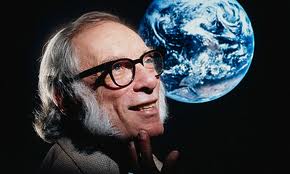
Isaac Asimov

Isaac Asimov

PARIS – Back in Paris for the next few weeks now, I did not do any open mics last night as I was flying back from Budapest. So today, nothing to report on the open mic scene in the clouds…. But that makes this a good moment to add another story from my archives to my collection of blog stories, as opposed to posts.

This time, I have selected a story about the world’s most prolific authors of books that could go into the blog stories as opposed to posts category, but it could also fit well into the Brad’s Rejected Stories area, since it was rejected at least 12 times, including from my own newspaper where I worked, before it got picked up and published at the Los Angeles Times in their Sunday Book Review as the lead essay at the bottom of the page.

It was an over-the-transom submission, I did not even have an editor’s name to address it to. Sometimes these things happen, if you get the right story to the right person at the right time. In fact, the story was spotted by the fill-in book editor of the time, Kenneth Turan, who that same year, 1991, became the Los Angeles Times’ film critic, a job he still does today. In 1993 he became the director for the Los Angeles Times Book Prizes.

I wrote this story about the world’s most prolific book writers by querying all the writers I could find who had written and published hundreds of books – like Isaac Asimov and Barbara Cartland. Most of those I queried kindly responded. Needless to say, I was glad not to let them down when I came through with publication after all the rejections….

Powered by WordPress.com.