Brad Spurgeon's Blog

A world of music, auto racing, travel, literature, chess, wining, dining and other crazy thoughts….

My New Single, a Cover of “How’s the Family” – a Song by Elliott Murphy, and With Elliott Murphy

June 5, 2025
bradspurgeon

How's the Family (cover) Photo Credit: ©David Douglas Duncan

How’s the Family (cover) Photo Credit: ©David Douglas Duncan

PARIS – Readers of this blog might remember that just over a year ago I published a big feature article in The Village Voice about Elliott Murphy, a major singer-songwriter of the last half century, who gave up his life as a rocker in New York City for …life as a rocker in Paris. Murphy is a one of a kind who has had an atypical career that began with his first album, Aquashow, released in 1973, when he was hailed as the next Bob Dylan. Since 1989 he has lived in Paris and tours Europe year round serving his fans here, who have now supported him through not only the first four albums from major labels, but right up to his most recent, possibly his fiftieth or more, album, called Infinity. Now to get to the point of this impossibly long lede: (jump to the nut graf below):

Some months after my article about Elliott was published I decided – but not for the first time – to see if there were any of Elliott’s songs that I might myself be able to play on the guitar and sing. It was not an easy task – so deceptively simple can they be, as I discovered. Then, somehow, I managed to give a spin through one of the great songs of that first album, “How’s the Family.” I succeeded in finding adequate chords, and a key that suited my voice – that required a lot of trial and error. And the only thing that really stumped me was the vocals in the chorus.

That said, I was also conscious that my effort bore very little resemblance to the sublime original version Elliott did on Aquashow – and still does. But I had a feeling, a way to approach it, that made it feel to me a little more like some kind of crooner song and approach – with a bit of jazz and folk mixed in.

I recorded the song on my iPhone 13 Max in my living room – guitar and vocals. Then I had the crazy and somewhat presumptuous idea that I should send the recording to Elliott to see what he thought – and as a way to show my thanks for his creations. I excused myself over the vocals on the chorus, however.

To my enormous surprise, he wrote back and said that if I ever considered releasing the song, he would be happy to add some backing vocals on the chorus and a bit of harmonica! That was it. All the motivation I needed to do a proper recording in the studio and get this DONE! My first studio recording in a decade.

In short, I wasn’t going to let pass an offer like that. So I set about the recording: I went to Basement Studio in Paris, owned and operated by my old friend Nick Buxton, and he recorded me on my guitar and vocals. He did a rough mix of that, which I then decided to send to my childhood friend, Danny Colomby, in Canada. I have known Danny since I was at minimum eight years old. I have ALWAYS dreamed of doing a recording with Danny, but never felt up to it.

Danny is a musical wizard, and always was (in my eyes.) He is a magical bass player, who has played with legends. His first cousin was Rick Danko, bass player for The Band, while his father’s first cousin was Bobby Colomby, drummer for “Blood, Sweat, and Tears.” But beyond that, Bobby Colomby discovered Jaco Pastorius, the greatest ever electric bass player, and he produced Jaco’s first album. I especially love Jaco’s work with Joni Mitchell. So when Danny – who plays like Jaco – accepted to play along on this track, I was over the moon.

What I never expected was that Danny would put two different basses, including the fretless, in a beautiful backing melody, and some keyboards and percussion. And a great mix! Out of this world.

The ultimate moment was when I sent Danny’s mix finally to Elliott Murphy, and he not only returned it with his backing vocals and his harmonica, but also some Rhodes piano, percussion and guitar! What is so fabulous aside from Elliott’s musicianship here – that ethereal harmonica – is that he had the humility to contribute to a cover of his own song that is so different to the original, except for the obvious main melody and all the lyrics. (To start with, the tempo of my version is much faster than the original.). To accept that and to play his harmonica along with this different version is a testament to the depth of the man. Out of respect for him, in addition to my version, I am posting here below his own original from Aquashow.

How’s the Family by Elliott Murphy from Aquashow

I then sent it all back to Danny, who offered to do a final mix. Then, to seal the whole, I passed it all on to Ron Bousted at Revolution Mastering in the US, who had mastered my CD “Out of a Jam” a decade ago.

Finally and ultimately, after all this bla bla, give a listen to those extraordinary lyrics, written by a 24-year-old, more than 50 years ago, and that still ring true today.

My cover of “How’s the Family” is now posted and available for streaming or download at all the major music streaming services – Spotify, Apple Music, iTunes, etc., and in Spotify, in the link above. My plan now is to create a music video for it. So keep posted!

Another Story of French Crime Writers: Marc Villard

December 27, 2020
bradspurgeon

Marc Villard

Marc Villard

PARIS – I decided to publish another instalment of my occasional pieces from the period in which I wrote all about the writers of the French crime novel. Adding to my interviews with Jean-Bernard Pouy and Maurice Dantec, I have now put up a feature interview article that I did with Marc Villard. Villard has written hundreds upon hundreds of short stories, as well as novels, poems and scenarios. He also had a double career as an art director at Givenchy, and for many years he was the rock critic at Le Monde! Now if that is not enough to draw your attention to looking at my story, “From the Bourse to the Banlieue: Marc Villard, a French Master of the Short Story, and then some,” then perhaps you might like to skip my story about him and click on the links I put in its introduction that will take you directly to his site and the short stories of his that I translated from French to English. That will give you the best idea of some of what he does. So check it out anyway! Today I also suddenly had the idea, by the way, that I might in future do a special page devoted to all of the writings I did about the French crime writing scene, rather than have to have you scrolling through the menu above about “blog stories rather than posts.” The centrepiece, of course, was always my roundup story from “The Armchair Detective,” that I put above under the simple heading, “France and the Crime Novel.” Anyway, check out Villard now!

Reflections on my Friday and Saturday Synchronicities: From Formula One to French Nationality

December 11, 2019
bradspurgeon

Lewis Hamilton head butts Tom Clarkson at F.I.A. prize giving (not really).  ©Photo Brad Spurgeon

Lewis Hamilton head butts Tom Clarkson at F.I.A. prize giving (not really). ©Photo Brad Spurgeon

Last Friday, 6 December 2019, marked the exact anniversary date three years ago that I finished working in my job reporting about Formula One for The New York Times (based in Paris, but writing for both its international and U.S. editions). It was also the day that I was invited to attend the International Automobile Federation‘s prize giving ceremony press conference at the Carrousel du Louvre in Paris, where Lewis Hamilton and the Mercedes team received their trophy for winning the Formula One titles this year, along with the other F.I.A. champions from other series. So with that personal synchronicity in mind, and as a fan of the series, I attended the press conference, wondering how I would feel about my past life re-emerging on that timely date.

Before I say more about my feelings on that, I want to mention the other synchronicity – the next day, or rather, at around 1:38 AM that same night/next morning: Saturday, 7 December. That day is my birthday – which my brother, Scott, likes to quote Franklin D. Roosevelt on regarding the 7 December 1941 attack on Pearl Harbor as “a date which will live in infamy” – and in France’s Journal Officiel dated 7 December 2019 published around 1:38 AM that day, I found the decree that said I had become a French citizen. I had been fighting for that honor for 3 1/2 years – ie, since the Brexit referendum – and that it should fall on my birthday, and precisely three years after ending my career as an NYT journalist, was beautiful – and felt full of significance.

Lewis Hamilton talking about his fashion line at the F.I.A. prize giving in Paris

So the whole weekend was a blessed time. Despite having to battle my way through a French transport strike and rain, arriving at the Louvre drenched in both sweat and precipitation (from running through the rain for the last 40 minutes of the journey), the visit to the prize giving was an extraordinary moment. It was the first time I found myself involved in an F.I.A. press conference while no longer reporting for my newspaper. While I did decide that I would do a few tweets and write something about it on this blog – thereby making it a legitimate invitation – my biggest reason for attending was to see the world in which I had lived for more than two decades from my new point of view as a fan only.

I was delighted to meet up again with so many of my former paddock friends and colleagues: Journalists like Joe Saward, Jonathan Noble of Autosport, Frédéric Ferret of L’Equipe, Alain Pernot of Sport-Auto and other publications, and Andrea Cremonesi of La Gazzetta dello Sport, Tom Clarkson, who interviewed the drivers for the F.I.A., or Dieter Rencken, the South African journalist; team press officers like Bradley Lord of Mercedes (who has been press officer in teams that have now won the title 8 times (Renault and Mercedes), and his boss Toto Wolff. And of the drivers, there was Jean-Eric Vergne, the Formula E champion whom I have known since he was 15; Fernando Alonso; and, of course, Lewis Hamilton. And finally, Jean Todt, the president of the F.I.A., whom I first met as the Ferrari team director in 1997, who was also present as the organizer and key officiator of the event, of course.

I guess the word best to describe the experience would be: Flashback! But for the first time attending a press conference, I felt no pressure to produce any reports.

It was, though, very strange to hear the same kinds of questions being asked in the same way by the same people to the same people. It made me wonder how it feels for the drivers and teams to confront the same members of the media year after year, decade after decade. This, of course, is the same situation we find in any media circus: at the White House, the Olympic Games, soccer or even in coverage of show business, fashion or even science, no doubt.

But I thought about how surreal it must feel sometimes for the stars, such as Hamilton and Alonso, (and even for the not as successful drivers who must sit next to these stars and be ignored by the media while all the questions go to the stars, as happened in Alonso’s World Endurance Championship racing team, as the Spaniard received all the questions from the media). How surreal it must be to see the same inquisitors asking the same questions year after year.

And I am not here criticizing the work of my former colleagues or of the F.I.A., all of whom are doing a fabulous job. This is just the nature of the beast. But having been away from it all for so long, it felt strange to find myself plopped right back into the paradigm, as if time had stopped, and all that I had done for the last three years had never existed, and I was again reporting on Formula One and other car racing series.

It was a little like how it felt a few months ago when I visited The National Theatre in London where I had worked 42 years ago as a bartender, and I found the place unchanged. And I thought, had I stayed there and made a career of it, I would have been in a world unchanged, rather than having felt as if I have lived a full, adventurous life since then….

Fernando Alonso talking about his experiences as a multiple world champion in different disciplines

It certainly comes down to our passions: Probably most of the people who have and will spend their lives in Formula One – or at the National Theatre – cannot imagine a life they would love better than that, cannot imagine a life without that environment. I spent 33 years employed by the International Herald Tribune and its successor, the International New York Times. While I would have happily continued, I am even happier that I have been able to transform my life into something else since then – working in the TAC Teatro theater company (back to the past?!), playing my music, writing on other subjects, avoiding much travel, and making films – while remaining a fan of racing.

These observations are probably obvious to most people, and probably I had many of them to a slightly lesser degree while in the thick of reporting on Formula One. But during such an emotional couple of days, it was all perfectly timed: The world DOES change. If we choose to make it change. I no longer cover Formula One as I used to. I still watch every session and race, and I still love it. But I am no longer part of the circus – or perhaps never really was. I am now French, after 36 years living in this country, and while I may feel like that is a fabulous consecration, I suppose that in many ways I have been French for decades.

But no wonder that the thing I found most interesting about the press conference was hearing Hamilton and Alonso talking about their life-changes, about the different worlds they live in, not just Formula One. I managed to film a bit of that, and I am putting it up here on the blog – in my role as a journalist attending a Formula One press conference again….

A bientôt!

Scoop!: A Surreal Reading of the NYT Obituary of Keith Botsford, Published a Year after his Death

June 17, 2019
bradspurgeon

Keith Botsford in a YouTube interview (before his death)

PARIS – I just had the most extraordinary obituary reading experience of my life.  And I must have read obituaries on an average of at the very least once per week for the last 40 or so years.  It felt at times as if I was reading satire, or high comedy, or was it low comedy?  It felt often like reading something out of “Scoop,” the satirical novel of the newspaper business by Evelyn Waugh.  Although I only saw it today, this obituary ran in The New York Times three days ago under the headline:  “Keith Botsford, Man of Letters and Saul Bellow Associate, Dies at 90.”   And the wild experience plants itself – as all good journalism should – right in the first paragraph (or lead, or lede):  “Keith Botsford, a globe-trotting, multilingual and multifaceted man of letters who became a longtime collaborator with Saul Bellow, died last year, on Aug. 19, in London — a death that drew little public notice at the time. He was 90.”

My first thought was that it was great that The Times decided to run his obituary despite him having died a year earlier. But then in the second paragraph I learn that his death did not really go so unnoticed as all that:  “His death was noted two days later by The New England Review of Books on its website and, 16 days later, in a 25-word paid death notice in The Boston Globe, but it was otherwise not reported widely. The Times of London published an obituary two months later, and the Boston University alumni magazine, Bostonia, noted his death in its recent winter-spring issue.”

This reminded me that I had read last year the obituary by The Times of London, or was pretty sure I had. They are among the best obits in the world, and they are quite widely read and authoritative.  So it seemed to me that the media that really missed Mr. Botsford’s death was more The New York Times, not really the wider world as such, as the first paragraph indicated.  This was, in short, no scoop!  But it led directly and immediately to the next extraordinary moment in this reading experience in the third paragraph:  “The New York Times learned of his death on Thursday while updating an obituary about him that had been prepared in advance in 2014. Reached on Saturday, his son Gianni confirmed the death.”

Wait a minute!!!!  Hold it!!!!  Ever since the horrendous Jayson Blair incident at the NYT, when an up-and-coming reporter was found to have fabricated a large number of his articles – i.e., made up the stories, the quotes, and even the travel expenses (as he sometimes claimed expenses for trips not taken, the stories having been written at home) – the NYT devised a number of new rules about reporting that I find absurd, and which it has in many cases stuck to ever since.  One of these is to say exactly where a person was interviewed from:  ie, “said Mr. So-and-So in an email”  or “said Mr. So-and-So in a telephone call” or “said Mr. So-and-So in a text message” etc., which personally I have always found interferes with the reader’s experience of trying to learn about what was said and not how it was conveyed to the reporter.

And one of the often most infuriating – to me – such rules, which I remember as coming from that same Blair period, was the one about having to have confirmation from a family member or some official of the death of the subject of an obituary.  So here we are with the venerable New York Times giving us an obituary in which we are told that the subject died almost a year earlier, that it was reported in several major publications and that there was even a – perhaps obligatory – death notice bought in the formerly NYT-owned Boston Globe…and we have to have the NYT call up the son of the subject of the obit and ask him to confirm the death to put the suspicious reader’s doubts at ease!?!?!  Despite abundant proof that the subject died a year earlier?

This is also the point when the satire of the form of the article begins to create an even wilder mix with the subject of the obituary.  The next paragraph, right below that stylistic convention in the NYT – here absurd – begins with this sentence about the subject of the obituary:  “Mr. Botsford was a fluid, prolific writer unfettered by the boundaries of form or genre.”  I said to myself, “So what the hell then would Mr. Botsford be thinking now about this boundary of form of the genre, I wonder?”  That the NYT had to ask for confirmation from his son despite ample proof he was dead and gone…or if not ample proof, then at least nearly a year has passed, which would be plenty of time for Mr. Botsford to write letters to the editors of the venerable publications that announced his death, complaining, as another famous writer had, that reports of his death were greatly exaggerated.

We now learn that Mr. Botsford was “a novelist, essayist, journalist, biographer, memoirist, teacher, translator and founder, with Bellow, of three literary magazines, most recently News From the Republic of Letters. … A Renaissance man, he also composed chamber works, a ballet and choral music, and was fluent in seven languages and able to read a dozen.”

Here we begin rising even higher in this crescendo of the extraordinary nature of this obituary and its subject:  Botsford’s life was a tale that might stand beautifully alongside that of Woody Allen’s Zelig, for being a man all over the map, except here Botsford’s talents are clearly exceptional, and not just some chance thing.  (In addition to his literary exploits, the article tells us that, “By his account he served as a spy in Eastern Europe and the Middle East.”)

But then the obituary’s extraordinary nature pokes its head out again a couple of paragraphs later with our first “live” quote from the subject of the obit when describing his first meeting with Saul Bellow in the early 1950s at a party, which would lead to the two writers becoming lifelong friends and colleagues:

“It was Saul Bellow, and he was pinned against the wall by a dreadful man from Winnipeg,” Mr. Botsford recalled in an interview for this obituary in 2014. “I had just read ‘The Adventures of Augie March,’ so I walked up and started talking to him.”

Bellow, left, and Botsford

Bellow, left, and Botsford

Hold the presses again!!!!  Our first quote from the deceased comes from an interview that was done by the author of this very same obituary and for the purpose of this very same obituary that we are reading.  What?!?!?  I may have been very inattentive in my reading of obituaries, but I feel this is the first time I have been informed that the subject of the obituary was interviewed by the writer of the obituary for use in the obituary itself.  Is this morbid?  Well, thank goodness they informed us in the beginning of the story that the son of this man confirmed to the NYT that this man was indeed dead.   Otherwise, reading that he had been quoted here from an interview he did FOR this obituary, I might have thought him still alive and taking part in some kind of a practical joke about his own death notice….

Wild!  But it also makes me feel as if someone at the NYT must have said, “Gee, we went to so much trouble to write this obit, including interviewing the guy, and we then missed his death and never used it?!  Come on.  Let’s not waste this.  Get it in print.”

The obituary then spends several paragraphs talking about the relationship between these two men – is it more about Bellow than about Botsford?  No, no.  – until I get to a part where I learn that Mr. Botsford and I have something else in common aside from both being fans of Bellow:  “In his journalism, Mr. Botsford was equally at ease writing about movie stars, concert pianists, bullfighters, novelists and race drivers. Formula One racing and the Boston Red Sox were two of his passions, along with literature, music and food.”

Formula One racing!  Which, yes, I wrote about for a couple of decades for the NYT and its International Herald Tribune edition (although I have no longer been employed by either paper since 2016, and I still love reading the NYT, as this rant makes clear).  But that’s just a personal thing that lit a fire for me, and probably has no place in this rant!

We find he also published some two dozen novels, and had the university education and degrees of about three or four people all rolled into one.  We learn that he was born in Europe, and his family background was as fantastic as his own life, particularly the larger than life tale of his mother and her family.  Her name was “Carolina Elena Rangoni-Machiavelli-Publicola-Santacroce,” and, continues the article, “He said that his mother was a descendant of Niccolo Machiavelli and that his father’s ancestors had helped found Milford, Conn., on Long Island Sound, in 1639. Mr. Botsford recalled his maternal grandmother employing 120 servants at her house near Recanati, Italy, on the Adriatic Sea.”

Wow!  Love it!

Picasso and Jacqueline

Picasso and Jacqueline

He ended up moving to Costa Rica and living in a fabulous home overlooking the sea, a house designed by his son, an architect – and the very man who confirmed his father’s death to the NYT a year after it happened – and then one of the most extraordinary moments of all, the kicker, for me, of the tale of Keith Botsford’s extraordinary life:  We learn that he was married three times, and that his last wife was 52 years younger than him!  That stands as a record for me of age difference in spouses, far outdoing even Charlie Chaplin and Oona O’Neill’s 36-year difference, or Picasso and Jacqueline’s 45-year difference!

So here, the subject of the obituary finally takes over in wonderment from the form of the story completely – form follows function at this point – and we are left with a feeling that this was absolutely a unique, extraordinary person, and thank goodness the NYT chose to publish this story, even one year too late.

Having said that, the subject of the obit and the tale of the obit itself, its writing form, come together again in the kicker that the NYT writer left us with.  The following concept may be true of Bellow and Botsford, but it is also clearly true of the way this obit was written – whether intended or not:

“Whether writing fiction, journalism or biography, Mr. Botsford always kept the reader in mind. For this he thanked Bellow:”

“As my dear friend Saul Bellow put it to me, ‘Take the reader by the hand, Keith, and he will follow you anywhere.’ Or as I tell my students, ‘You are not writing for me, but for the world. Or at least for your Aunt Nellie in Boise, Idaho.’ ”

Something tells me that Keith Botsford would have been amused.


Follow Brad Spurgeon on Twitter

Seven Weeks Away, but Not Just a Vacation: From Paris to Milan to England to Sicily

July 31, 2018
bradspurgeon

Ornella Bonventre at the Greek Theater in Segesta, Sicily

Ornella Bonventre at the Greek Theater in Segesta, Sicily

CASTELLAMMARE DEL GOLFO, Sicily – It seems hardly possible that it has been exactly seven full weeks since I last posted on this blog. That has to be a record absence for me. It equals one year’s worth of vacation when I was on staff of the International Herald Tribune, the Paris-based newspaper that worked under the French labor system and so gave us lots of holidays each year. I can say that these last seven weeks have not been a holiday, but the busiest time of the last year – which is the reason I have not been contributing to the blog. So here is a point-by-point recap of the main events of the last seven weeks:

1. Most of early June was spent digging out nearly 20 years’ worth of my piled up papers, paraphernalia and trash from my garage and cave in order to make space for Ornella and her TAC Teatro’s paraphernalia from Italy. Cleaning these places led to many wonderful discoveries, but also some very difficult decisions; among the many relics that I found were three never-before-used Zippo lighters with the aforesaid International Herald Tribune’s marketing department’s effort to publicize the newspaper’s coverage of the 2000 presidential elections. Beautiful objects that I had kept but never once used, I now find use for them, particularly for Ornella and my daughter’s smoking habits….

IHT Zippo lighter

IHT Zippo lighter

I am loving the process of filling these classic lighters with fluid, new flint stones, etc. (I am a little disappointed at how quickly they are losing their paint job, though, as you can see from the photo of this lighter used by Ornella for just one month.) There used to be so much more “process” in the past in our daily lives…. But among the difficult decisions in this vast clean out, was whether I should keep the hundreds of copies of actual newspapers – of the aforementioned IHT – that had the print versions of my articles in them. I had always taken hard copies of the paper home to have a record of the printed work – but I had never had any use for these relics. Now, I found myself with the difficult decision of either throwing them away or else having no further usable space in my storage areas. As I knew that all of the copies existed in microfilm or other electronic form, as well as online in the online archives of The New York Times – many of which copies I also had to decide whether or not to keep – I ultimately decided to throw them all away. It was a heartbreaking moment, but also a feeling of truly moving on into the future. Like the Formula One teams that I had written so much about, I chose to look forward, rather than backwards at personal mementos.

2. Having cleared out these storage spaces, it was time to go on a brief trip to Milan in order to clear out TAC Teatro and prepare the moving van to bring to Paris all of the aforementioned paraphernalia. It was a massively busy and tiring three or four days that also involved very difficult choices. For instance, the most heartbreaking for Ornella was the decision to leave behind the linoleum flooring that she used as the floor of the theater space, and which had come directly from use on the floor of the famous La Scala Opera House, and had, therefore, been danced upon my some very famous performers. But it was just too heavy, massive when rolled up, and required a very good cleaning job, which we had no time for. We nevertheless managed to pack up and transport to Paris two tons of paraphernalia, including seating for at least one hundred spectators, a sound system, a series of spotlights, a piano, keyboard, drum, a workbench table from a famous Italian filmmaker and writer, and countless other items far too long to list here without getting anymore boring than I already risk being. The whole collection of paraphernalia ended up taking two moving vans instead of the original one that had been planned for.

3. We returned to Paris and spent the three or four days waiting for the delivery by finishing the cleanup of the storage space. (Let me note that this was happening in a hot month of June, and with all the dust from the spaces, and the pollen in the air, I wore a face mask nearly full-time to help my breathing.) When the paraphernalia arrived, we then spent two days filling up the storage spaces, but rest easy knowing we can now prepare for the future. It was also very satisfying to have replaced my 20 years’ worth of accumulated crap by this investment in the future of TAC in France.

Philosopher of Optimism

Philosopher of Optimism

4. No sooner did we catch our breath again, barely able to believe what we had accomplished, than we departed for a quick trip to England, where it was time for some more very satisfying work: The first stop was Nottingham, where I was invited to attend the Second International Colin Wilson Conference in order to do the very first public screening of the interview film that is connected to my book, Colin Wilson: Philosopher of Optimism. Produced by a British film production company as well as the publisher of my book, Michael Butterworth, and his other company, Savoy Books, and directed by Jay Jones, it consisted of an hour and a half interview of Colin Wilson by me. Although the film was done in 2006, it was never quite finished. I recently decided to ask if I could work on the edit through my company, the perfectly named, “Unfinished Business SAS.” I was given the go-ahead, and prepared first a trailer for the film (below) and then I prepared the film for this private showing for the 55 people attending the three day conference, including the members of Wilson’s family – three of his children, and his wife, Joy. That last name is certainly the right word for me to use as well to describe the entire event, and especially the reception of the film: It was a pure joy!

5. From Nottingham, Ornella and I headed on to the Cotswolds for a brief visit to have a reunion more than 40 years after I met him with the man who created my ventriloquist’s figure, and to whom I brought the suspect in question for a facelift (and a body-lift). But on the way there we had a fabulous, three-hour long meeting and tour of the Renault Formula One factory at Enstone.

Brad and Ornella at Renault F1 Team

Brad and Ornella at Renault F1 Team

This fell the day after the team’s home race, the British Grand Prix, and at the end of the series’ horrendously tiring triple-header of races in June/July. Although it was the strangest feeling for me to be in England during the race weekend without attending the race itself, the trip was more than compensated for by both our stay overnight in Oxford – where I played in two different open mics (and can now update my Oxford guide), followed by the trip to see Peter Pullon in the Cotswolds. This aforementioned ventriloquist figure builder has become one of the world’s foremost puppet makers, having created some of Britains most famous figures: Rod Hull’s Emu, Honey Monster, the Hoffmeister Bear, Smash Martians and Keith Harris’s
Peter McCabe with Peter Pullon

Peter McCabe with Peter Pullon

Orville. I am waiting with baited breath the renovation of my figure, whose name is Peter McCabe, and for whom I have some future plans that I will talk about on this blog as they happen. (Peter most recently had a cameo role in my video of my cover song of Mad World, by Tears for Fears.

6. No sooner did we return from England than it was off to Sicily for us and a three-week vacation, during which period I have, nevertheless, been using every available moment to make plans for the future year, and my many projects for my new life in Unfinished Business…. We have been staying in Ornella’s hometown of Castellammare del Golfo, and reading on the beach by day, and walking the city streets by night, occasionally finding places to play my guitar and sing. We have done a lot of tourism, as well, which we have posted about copiously on Facebook. The highlights for me have been the visit to Segesta and its ancient Greek temple and above all, its ancient Greek theater.

A Plant Growing from the Encasing Sculpture in Gibellina.  ©Brad Spurgeon

A Plant Growing from the Encasing Sculpture in Gibellina. ©Brad Spurgeon

The acoustics of this place are astounding – although I’m not sure the plywood floor they chose to use to cover the rock surface of the stage was wise. And the most painful and touching visit was to the site of the 1968 earthquake, which killed more than 900 people and wiped out two towns. The ruins of many of the buildings remain locked in time in the countryside, and one of the towns, Gibellina, is now covered, encased, in a white concrete monument, or work of art, to mark the tragedy. Walking amongst these ruins and the monument, is a deep, difficult, but valuable experience.

7. I almost forgot to mention that in between all of these activities and right at the beginning of the month, we found a space in Paris that we are looking at as a possible future location for TAC and Unfinished Business. But it represents quite an investment, and it required us to make trips to the bank, an accountant, work on a business plan, and generally occupy all of the free time we had between the above activities! (And we have still not finished working on that.)

So as you can see, I have been busy as anything in the last seven weeks. But now I’ve had a moment to record it all in the web log, and I’m glad to have had so many rich experiences to get down here….

Acchiappa Sogni – In Via Padova: A Short, Short Film about Big, Big Dreams in a Neighborhood in Milan

February 9, 2017
bradspurgeon

TAC Teatro

TAC Teatro

MILAN – Three small hand-held cameras, a walk around Milan’s down-at-the-heals but lively, warm neighborhood of the Via Padova and an idea from the director of the local TAC Teatro, Ornella Bonventre. That’s all it took to for a cool trip through the lives of the people of this passionate neighborhood and find out what drives them, how they see the world, and above all, what are their dreams.

I was proud and pleased, and even astounded, to be part of this little adventure, and to find what makes people tick – like the record store man who said his store WAS his dreams, or the telephone parts shop salesman who said to be “a good man” was the goal and the end, or the supermarket worker who spoke of integration from his origins in North Africa…. Here is the video, which I also had the pleasure of editing – and if you listen closely to the soundtrack, you might recognize it. (Hint: The music, sans vocals, of my song, “Borderline.”) (You may also recognize that one of the interviews took place in the Ligera bar, about which I have posted an item or two on this blog for its musical evenings.)
So check out the 6-minute dreams video, called “Acchiappa Sogni – In Via Padova“:

A Celebration of My Father’s Life, an Obituary of David Carey Spurgeon

April 15, 2015
bradspurgeon

Spurgeon Middle East poster

Spurgeon portrait

David Spurgeon

Today, it is with great sadness that I am announcing on my blog the death of my father, David Carey Spurgeon, who died on Saturday, April 11, in a hospital in Ste. Agathe, Quebec, two days after celebrating his 90th birthday. Although I rarely speak about my family on this blog, I am also announcing with a sense of pride, that I have decided to celebrate my father’s life and achievements here in a formal obituary that I wrote yesterday while waiting for my flight from Shanghai to Bahrain.

My father was a lifelong journalist, notably as science writer at the Globe and Mail in Toronto, and I have to say that a majority of the things that I know about the craft of journalism, I learned from him. I did so both through osmosis and his constant help. That help from him came especially in the early part of my journalism career, and especially in terms of his building up my confidence, at a time when I was receiving a barrage of rejection slips from editors for several years! He was my secret weapon against defeat, telling me what was right, or wrong, about my stories.Spurgeon of Arabia

Although I had considered for this blog to write some personal reminiscences about him, it occurred to me that as a first step, I’d rather take up the challenge of writing a newspaper-like obituary, impersonal, but factual; which is to say, the way that he spent most of his writing life, always trying to be objective, rarely putting himself in the story. I’ll let time take care of the rest of it, and perhaps some day in the future write something more. I have never before published an obituary of anyone, having only made one effort to do so in the past, and having had it rejected.

So here, for the moment, in my blog section of “Blog articles as opposed to posts,” is my obituary, of my father, a trailblazing Canadian science journalist, who covered most of the major science stories of the second half of the 20th century: David Spurgeon: A Life Devoted to Science, Communications and Living Well.

5-Minute Documentary About Dad at Open Mics by Daughter: Me by Emily

February 17, 2015
bradspurgeon

PARIS – Regular readers of this blog will be familiar with my ongoing project making a film about open mics around the world. Well, guess what? My daughter, Emily, beat me to it! As a student at the Ecole de la Cité film school outside Paris, she had a class exercise to make a 5-minute documentary film portrait of a person. She decided to choose as a subject her wacky, crazy Dad who travels around the world doing open mics – while writing about Formula One car racing as his real job….

One of the main riddles she had to solve in doing the 5-minute film, called “Rebellious Youth,” was what story to focus on in the telling? My bizarre past working in a circus, acting on TV and in films, in bit-parts, or busking in London and working as a bartender at the National Theatre, or writing about Formula One car racing and writing short stories and novels, etc. Where to start? So in order to find coherence to the story within the 5-minute limit, she decided to focus entirely on the story of a guy in his 50s who has a straight – or actually really exciting – day job writing for a major newspaper, who spends his spare time singing in bars at open mics with a generation that is generally many times removed from his own.

So that’s why there is the emphasis on the “old guy” playing music with young people…. Check it out for yourselves. I’ve been given permission by Emily to put it up on the blog. There are a few moments of pretty average sound quality, but keep in mind that Emily filmed the whole thing by herself with no crew, and then she edited it too. Thanks a million to the Coolin, the Galway and the Escargot Underground venues for letting her film during the open mics – and thanks to the people she interviewed for being so nice about what you say about me!!!!

The Code de la Route: A Semiotician’s Delight on French Highways

July 31, 2013
bradspurgeon

france signsPARIS – Did you ever think that drivers in France answered to their own logic of the road like none other anywhere else in the world? Did you ever read the French Code de la Route and decide that the French will apply the exact opposite to a rule as laid out in the code once they have passed their license and take to the road? Did you ever wonder why things were thus? Here is a story that explains it all, from my archive, that I wrote and published in 1992 in the Ottawa Citizen after taking my French driver’s license and spending lots of money on the lessons that revealed the method behind the madness. It all comes back down to the great literary connection of the country’s flair for semiotics, the science of signs. So take a read through if you want those questions answered, and especially if you have to take the code and learn to drive in France yourself – or for that matter, if you’re just on holidays and need to take to the road amongst this nation of skilled semioticians, and drivers’ seeking revenge for being subjected to such a mind-numbing, wallet emptying process in the first place…

Today’s story from the archives is about the Code de la Route as semiotic exercise….

World’s Most Prolific – and Perhaps Compulsive – Writers

July 30, 2013
bradspurgeon

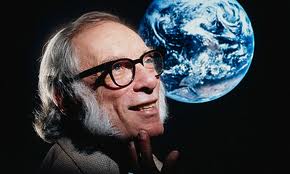
Isaac Asimov

Isaac Asimov

PARIS – Back in Paris for the next few weeks now, I did not do any open mics last night as I was flying back from Budapest. So today, nothing to report on the open mic scene in the clouds…. But that makes this a good moment to add another story from my archives to my collection of blog stories, as opposed to posts.

This time, I have selected a story about the world’s most prolific authors of books that could go into the blog stories as opposed to posts category, but it could also fit well into the Brad’s Rejected Stories area, since it was rejected at least 12 times, including from my own newspaper where I worked, before it got picked up and published at the Los Angeles Times in their Sunday Book Review as the lead essay at the bottom of the page.

It was an over-the-transom submission, I did not even have an editor’s name to address it to. Sometimes these things happen, if you get the right story to the right person at the right time. In fact, the story was spotted by the fill-in book editor of the time, Kenneth Turan, who that same year, 1991, became the Los Angeles Times’ film critic, a job he still does today. In 1993 he became the director for the Los Angeles Times Book Prizes.

I wrote this story about the world’s most prolific book writers by querying all the writers I could find who had written and published hundreds of books – like Isaac Asimov and Barbara Cartland. Most of those I queried kindly responded. Needless to say, I was glad not to let them down when I came through with publication after all the rejections….

Powered by WordPress.com.